10 Days -
NO FOOD
Listen to the audio version from spotify here.
Or just read the article below…
Table of Contents
I stopped eating for 10 days
Not for hours.
Not overnight.
For 10 full days.
No food. Just water, minerals, and a few supplements.
Sounds extreme, right?
That’s what I thought too — once.
But I didn’t do it to prove anything.
I did it for one simple reason.
I wanted my body to fix itself.
Previously we talked about breakfast.
About fuel. About what your body runs on.
This is where that road leads.
Why I really did it
Let me be honest about the “why.”
I had a small, nagging problem.
Nothing dramatic. Nothing you’d rush to a doctor for.
Dandruff that wouldn’t fully go away.
For a long time I ignored it.
But the more I learned, the more I suspected it wasn’t really about my scalp at all.
I suspected the source was deeper — some minor damage in my gut.
And here’s the interesting part.
Since eating low-carb and doing shorter fasts, that dandruff had almost disappeared.
Almost.
But I wanted it gone completely.
So I decided to give my body the one thing it rarely gets — a proper, uninterrupted chance to repair.
That chance has a name.
Autophagy — the body's repair crew
Here’s the mechanism most people never hear about.
When you stop eating, your body doesn’t just sit around waiting.
It gets to work.
It starts a process called autophagy.
Think of it as your body’s internal repair crew.
It hunts down damaged, worn-out, and faulty cell parts — and recycles them into raw material for new, healthy ones.
Old junk in. Fresh parts out.
The catch?
This crew mostly clocks in when you’re not eating.
Every time you eat, you call them off and put the body back into “process this food” mode.
So if your body has something to fix — say, some minor gut damage quietly causing problems elsewhere — constant eating never really lets the repair crew do deep work.
A prolonged fast does.
That’s exactly what I was after.
But wait, fasting is starving, right?
Wrong.
Let’s clear this up too.
Because most people hear “10 days no food” and picture suffering.
Starving is when your body has nothing left to burn.
Fasting is when your body finally gets to burn what it’s been storing.
Big difference.
A lean adult carries tens of thousands of calories in stored fat.
That’s not an emergency reserve gathering dust.
That’s fuel. Designed to be used.
So no — I wasn’t starving.
I was running on me.
The stages of fasting — can you start it smooth?
Fasting usually moves in stages. And each one feels different.
Hours 0–24: the handover.
The body burns through its stored sugar. For most people this is the hard part — hunger, grogginess, the “I need food” panic.
Day 1–2: the switch.
Sugar runs out. The liver starts making ketones from fat. The fog lifts, hunger drops off a cliff.
Day 2–3: the clean-up.
Autophagy ramps up properly. The repair crew goes into full swing.
Day 3 and beyond: the quiet.
Energy steadies. The mind sharpens. Hunger becomes a distant memory.
But here’s the thing.
For me, that rough early stage barely happened.
Because I was already properly keto.
When your body is already fat-adapted, it doesn’t have much excess sugar to burn through.
There’s no big handover. No dramatic crash.
The fast started smooth — almost from day one.
That’s not willpower.
That’s a metabolism that already knew what to do.
Is business as usual?
Yes, I carried on with life as normal.
This surprises people the most.
I didn’t lie on the sofa for 10 days.
I worked. I lived. I played with my kid.
My work is physical — 3 to 4 days of 12-hour work, plenty of steps, on my feet a lot.
And I’ve got a child who’s full of energy and wants to play. So I played.
I even went to the gym for one of my weekly sessions.
I did have to skip the second one — but not because of the fast.
It was because I hadn’t slept enough one night thanks to work, and I just couldn’t fit the second session in anywhere.
Which brings me to something important.
Sleep matters more than people admit
Some people struggle to sleep on a prolonged fast.
I didn’t — at all.
But that one poor night showed me how much sleep affects everything, fast or no fast.
And I think this is where a lot of people go wrong.
They blame the fast for their bad sleep.
But often it’s not the fast itself.
It’s that their minerals are starting to run low.
Or they’re missing B vitamins.
Or they’re not replacing what a fasting body naturally loses.
Get those right, and sleep on a fast can be perfectly fine.
Get them wrong, and everything suffers.
Speaking of which — I don’t touch caffeine.
Not one cup.
In the evenings I love a lemon balm tea instead.
Calm, gentle, no jitters, no cortisol spike before bed.
What I actually took during this fast
A fast isn’t just “not eating.”
It’s about protecting your body while it does its repair work.
So I don’t go in empty-handed.
Alongside water, I take my basics — salt and potassium to stay balanced.
But I go further than that.
I made sure I got enough salt and potassium every day.
The other big one was B vitamins — I took plenty of them.
But B vitamins need vitamin C to work properly, so I took a good amount of that too.
On top of that, a full range of vitamins and minerals.
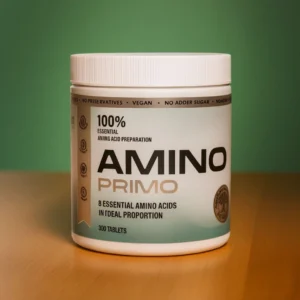
And lastly — but importantly — aminos. Namely Amino Primo.
Around 60g of Amino Complex, every day.
Interested of my exact protocol?

Now, the key idea is simple.
When food stops, your body still needs raw materials.
For repair. For balance. For keeping muscle intact.
If those aren’t there, the body takes shortcuts — like breaking down its own muscle to get what it needs.
And it doesn’t stop at muscle.
Other things can drift out of balance too — hormones, for one — and that opens the door to a whole set of problems.
That’s the last thing you want.
So I give my body the building blocks it can’t make on its own.
Not to break the fast — but to protect what’s underneath it.
And this is where it comes together.
99% of Amino Primo’s Essential Amino Complex is used as building blocks — clinically proven.
Which is exactly why I could rely on it through my fast.
Why I could even do this
I couldn’t have done a 10-day fast a few years ago.
No chance.
Back then I ran on carbs, refined seed oils, coffee, and eating many times during the day.
My body had no idea how to run on fat.
Skipping one breakfast felt like a crisis.
What changed wasn’t my discipline.
It was my metabolism.
Being on low-carb eating and avoiding refined seed oils taught my body to burn fat as its default.
Fasting just became the natural next step.
You don’t jump to a 10-day fast.
You grow into it.
So should you do this?
Honestly? Maybe not. At least not yet. And not like this.
A prolonged fast isn’t a beginner move.
It’s not a detox trend or a shortcut.
And some people should never attempt it without medical supervision.
But the principle underneath it is for everyone.
Your body is designed to run on its own fuel.
It’s designed to repair itself when given the chance.
And most of us never give it that chance — because we never stop eating long enough to find out.
So did it work?
I have to tell you — a prolonged fast just feels awesome.
I felt light. Like a butterfly.
No tension anywhere. My body just… let go.
My focus was sharp. My thinking quick.
Everything around me seemed to slow down, like I had more time inside every moment.
Even my senses sharpened.
Eyesight clearer. Smell stronger.
And calm.
Properly calm.
Nothing could push me out of balance. Nothing made me nervous.
Maybe that’s the fasting.
Maybe it’s all the B vitamins.
Probably both.
Either way — it’s a feeling most people never get to experience.
But do you remember why I started?
The dandruff. The gut. The repair.
Here’s where I actually landed.
The dandruff improved. But it hasn’t gone completely.
This wasn’t my first prolonged fast, so I wasn’t expecting a 25-year problem to disappear after 6 months of better eating and a handful of fasts.
My body could have other issues underneath it that I can’t even notice yet.
So I’ll keep going. OMAD, healthy eating, and a few more 3–5 day fasts along the way.
Refined seed oils take around 2–3 years to fully clear from the body.
Six months of better habits is a start — not a finish line.
What did change, though, is how I feel day to day.
My digestion is strong now. And I’ve become calmer.
I realised something important: food doesn’t control me anymore.
If I can’t get a good, healthy meal in front of me, I just skip it. I know I’ll be able to sort something proper out within 24 hours.
That whole idea of constant feeding — the tall, unmovable boundary most people never question — just falls apart once you’ve gone without food for 10 days.
And then there’s the thinking.
A lot of people in business — and elsewhere — reach for cocaine or amphetamines just to think faster and sharper.
I’ve tried amphetamines. Believe me, drugs never give you your true ability. They only give you the shadow of your real abilities.
But even a 24–48 hour fast, started from a fat-adapted body, gives you faster thinking and sharper focus — better than anything a drug ever gave me.
It won’t replace sleep, though. Nothing does.
So that was the whole point of this fast.
Not to punish my body.
But to finally give it room to fix itself.
What could your body actually fix?

Here’s something worth sitting with.
You might have things going on inside you that haven’t shown up yet.
Not diagnosed. Not even noticed.
Just quietly sitting there, subclinical, waiting to become a real problem one day.
A lot of what we call “getting older” or “just how I am” might actually be years of accumulated damage — damage the body was never given the time or space to repair.
And here’s the part that stopped me in my tracks when I first heard it.
Some people, facing the most serious diagnoses imaginable — advanced cancers, when conventional options had run out — turned to prolonged fasting as a last resort. 30, sometimes 40 days. Under strict medical supervision.
And some or more than some of them came through it.
And I wouldn’t dare to say that fasting cures cancer.
What it tells me is something different — how far the body’s own repair system can go when you finally get out of its way for long enough.
Luckily, most of us will never face something that serious.
But most of us are also never truly hungry, never truly running on empty, never really giving that repair crew a proper shift to work.
What might your body be quietly dealing with, that a bit of real fasting could help it face?
You won’t know until you give it the chance.
Nothing here is a promise. Fasting isn’t a guarantee, and everyone taking this on does so on their own responsibility — ideally alongside proper guidance if you have any existing health concerns.
But as I mentioned earlier — it makes a real difference if you go into a fast from a fat-adapted metabolism.
And there’s another piece just as important: how you come out of a fast matters as much as the fast itself.
So here’s what’s coming.
Next time, we’ll get into how to actually get into fat-adaptation — proper keto, done right, not the version most people get wrong.
And another time, I’ll walk you through exactly how I break my fasts — because getting that wrong can undo a lot of the good you just did.
share this article:
-
Sale!
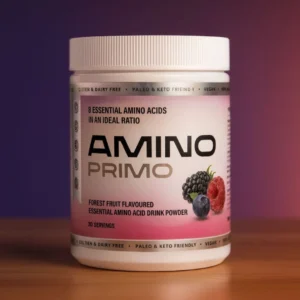
Amino Primo Instant Drink Powder – Forest Fruit Flavour
£44.90Original price was: £44.90.£35.90Current price is: £35.90. -
Sale!
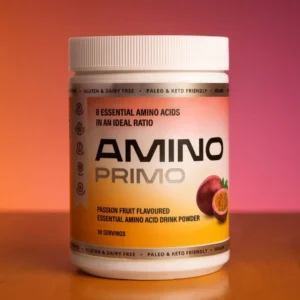
Amino Primo Instant Drink Powder – Passion Fruit Flavour
£44.90Original price was: £44.90.£35.90Current price is: £35.90. -
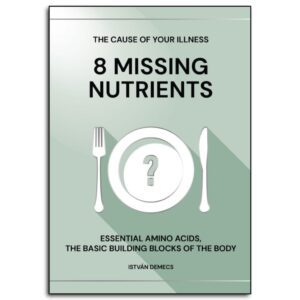
The Cause of Your Illness – 8 Missing Nutrients – Ebook
£6.95 -
AminoGo FuelPod
£2.95 -
Sale!
Amino Primo Essential Amino Tablets – 300 Tablets
£59.90Original price was: £59.90.£44.90Current price is: £44.90.
Still curious? Here’s more
10 Days – No Food
I stopped eating for days. Not to prove anything — but because I wanted my body to fix something it had been carrying quietly for years.

Why Everyone Feels Wiped Out After Christmas
Feeling exhausted after Christmas? It’s not laziness—it’s biology. Discover why festive habits drain your energy and what smart people are doing to recover faster in January.