
The Breakfast Debate
Listen to the audio version from spotify here.
Or just read the article below…
Table of Contents
Is it healthy to eat breakfast?
A simple question.
Except nobody agrees on the answer.
Your grandma swears that it makes you a champion.
The internet says just skip it, no matter what.
And your body? It gives you a different answer every day.
So what’s actually true?
Honestly?
I used to feel miserable skipping breakfast.
Irritable before 10am.
Surviving on two double coffees just to get through the morning hunger.
Digestion all over the place.
And somehow still not feeling right even after eating.
I thought it was normal.
That skipping breakfast is just supposed to feel like that.
Then I started to doubt it.
Maybe breakfast was the answer after all?
Turns out I was wrong.
I’d been asking the wrong question the whole time.
The answer might actually surprise you.
But before we get there, let me shake the number one belief about breakfast that has shaped how people think for more than a century.
Slogan or Science?
Let’s scroll back to 1917.
That’s when the line was born.
“Breakfast is the most important meal of the day.”
Not from a doctor. Not from science. Not from decades of research.
It came from a health magazine — run by a man who wanted to sell cereal.
His name? John Harvey Kellogg. Yes, that Kellogg.
A religious health fanatic who believed his grain-based breakfast was superior to anything else you could eat in the morning.
His dietitian wrote the line. The magazine made it sound official. And the idea spread like wildfire.
By 1944, cereal companies pushed it nationwide. Radio. Newspapers.
“Nutrition experts say breakfast is the most important meal of the day.”
There were no experts.
There was no science.
Just a brilliant ad campaign.
And it worked so well that over 100 years later, your grandma still repeats it — and still worries when you skip it.
Today the cereal industry is worth over $40 billion.
Not because breakfast is the most important meal.
But because someone said it was — before anyone thought to question it.
What do our livers say?
While you sleep, your liver works.
Not on food. On repair.
It cleans up. It tidies. It does the maintenance it can only do when you’re not eating.
Then you eat breakfast. And it all stops.
Insulin goes up. Fat-burning pauses. The liver drops the repair and starts dealing with your food instead.
On a high-carb diet, this hits early and hard. A carby breakfast spikes insulin fast. So the liver spends the day processing sugar instead of looking after itself.
Low-carb changes that.
Your body isn’t chasing morning sugar. Insulin stays low. And if you skip breakfast — simply because you’re not hungry — the liver keeps doing what it was already doing all night.
Lower insulin. Less fat stored. More repair time.
You’re not starving yourself.
You’re just giving your liver a longer, quieter shift to look after itself.
How low-carb and keto change the breakfast equation entirely
Here’s the thing though.
The breakfast debate isn’t really about breakfast.
It’s about what your body is running on.
If you’re eating a standard diet high in carbs — bread, cereal, fruit juice, toast — your body is almost entirely dependent on blood sugar for fuel.
But blood sugar runs out fast.
Your storage of it (glycogen) is limited.
So after a night of fasting, your tank is low, your blood sugar is dropping, and your body is genuinely signalling: feed me.
That’s real hunger, driven by metabolic dependence on glucose a.k.a. blood sugar.
Skipping breakfast in that state is genuinely hard — and for some people, genuinely not a good idea.
But switch to low-carb or keto, and the whole picture changes.
When you lower carbohydrates consistently, your body gradually shifts its primary fuel source from glucose to fat.
Fat is stored in abundance — even in lean people.
It’s a slow-burning, steady fuel source.
And it doesn’t spike insulin the way glucose does.
So when you wake up on a fat-adapted metabolism, your body isn’t scrambling for its next hit of blood sugar.
It’s quietly running on its own stored fuel — the same way it was doing while you slept.
Hunger in the morning becomes optional, not urgent.
Skipping breakfast — or simply pushing the first meal later — stops feeling like deprivation and starts feeling completely natural.
This is why intermittent fasting is so much easier on keto or on a low-carb diet.
And why “skip breakfast” advice that sounds extreme to most people feels completely effortless once your metabolism has shifted.
It’s not willpower.
It’s fuel.
How to feel like a real champion
By now you already know that I didn’t always eat this way.
There was a time when I ran on multiple coffees, ate a standard high-carb diet, and felt the afternoon crash that most people just accept as normal.
Shifting to low-carb changed the baseline.
My last meal moved earlier — naturally, not by force.
My morning hunger quietly disappeared.
Coffee became just one in the morning — and then I quit it totally, because I didn’t need it to function.
And from there, fasting became less of a thing I was “doing” and more of a thing that just… happened.
First, meals got pushed later. And last meals got pushed earlier.
So fasting windows got longer.
And all of a sudden I was on one meal a day.
Then I started exploring what happens when you extend the fast not for hours, but for days.
Right now — as I’m writing this — I’m in the middle of a prolonged fast.
No food for days.
Just water, some supplements, and the kind of mental clarity that most people find hard to believe until they experience it.
Next week, I’ll take you into that properly.
What happens to your energy, your focus, your sleep, and your body when you remove food entirely for an extended period.
For now, the question worth sitting with is simpler:
What is your body actually running on in the morning?
And is breakfast something your body genuinely needs — or something you’ve just always done because someone told you to in 1917?
share this article:
-
Sale!

Amino Primo Instant Drink Powder – Forest Fruit Flavour
£44.90Original price was: £44.90.£35.90Current price is: £35.90. -
Sale!
Amino Primo Instant Drink Powder – Passion Fruit Flavour
£44.90Original price was: £44.90.£35.90Current price is: £35.90. -
The Cause of Your Illness – 8 Missing Nutrients – Ebook
£6.95 -

AminoGo FuelPod
£2.95 -
Sale!
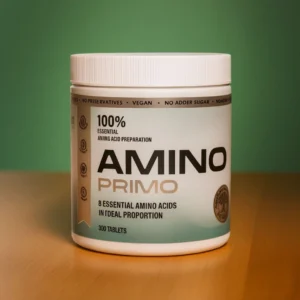
Amino Primo Essential Amino Tablets – 300 Tablets
£59.90Original price was: £59.90.£44.90Current price is: £44.90.

Still curious? Here’s more

The Forgotten Epidemic: How Pellagra Shaped Modern Nutrition
Discover how pellagra — the disease of the four Ds — shaped modern nutrition. From historical epidemics and niacin deficiency to ancient maize wisdom, learn the lessons for today’s health and diet.

Why Your Muscles Might Be Starving Even on Keto
There are a few common problems that can sneak in and stop your body from doing what it needs to.